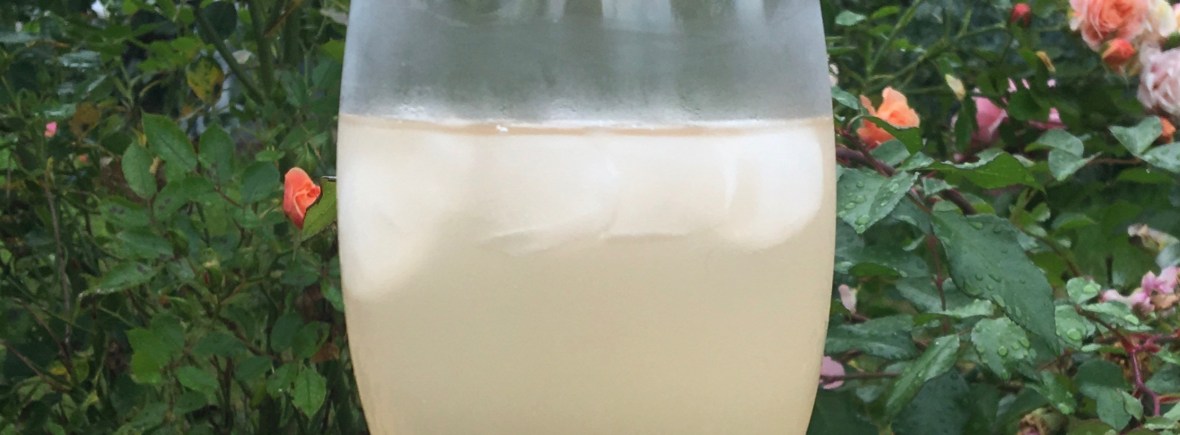
This is a great summer wine and is particularly good served over ice. I wanted to include a photo of the finished bottled wine but the 5 gallon batch we made at the start of the season tasted so good we have none left! One of our young visitors said that it was the nicest wine she had ever tasted (thanks Becky – you are welcome anytime).
Thankfully I had made careful recipe and method notes. An end of season batch is now in progress – thanks to Rob for supplementing our dwindling rhubarb supply.
This recipe is a combination of recipes at http://www.rhubarbinfo.com/wine thoughts from expert Rhubarb winemaker and close friend Brendan and some local executive decisions!
1.25kg Rhubarb per gallon
1.25kg Granulated white sugar per gallon
1 level teaspoon dried active wine yeast per gallon
1 large pot of 3 teabag stewed tea per 5 gallons (for tannin)
Campden tablets for equipment sterilisation and stopping fermentation/reducing contamination during bottling
(see also Ingredient Details below)
Method
Wipe (not wash) rhubarb and chop into 2-3cm pieces.
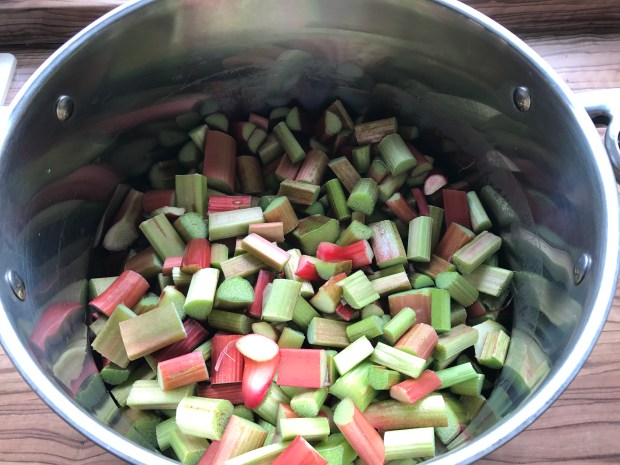
Put into large stainless steel pan and cover/layer with the sugar.
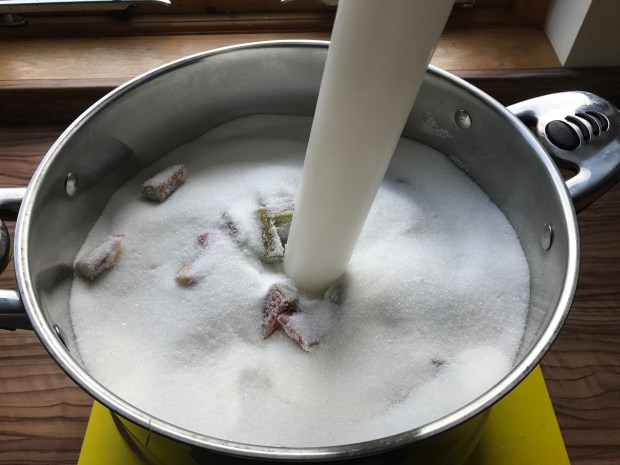
Stir the mixture and crush the rhubarb with the end of a rolling pin to aid the juice extraction to make the syrup.
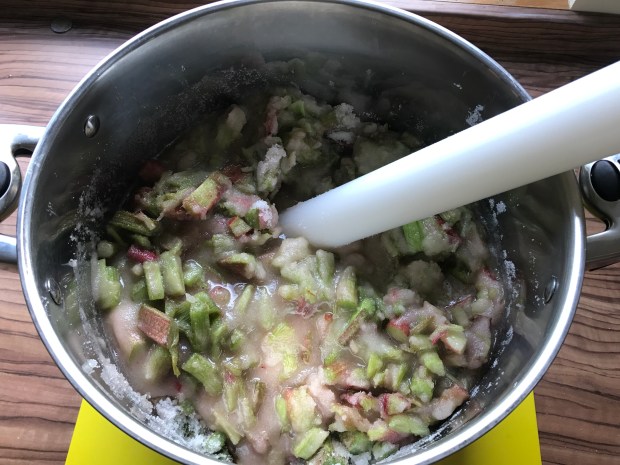
Cover with a clean tea towel and put to one side for the sugar to work on extracting the juice from the rhubarb. Stir and pummel once a day for 6 days – we were waiting for our 5 gallon wine bin and tap to arrive and because the wine tasted so good we are sticking with 6 days which is slightly longer than some other recipes!
After 6 days you will have a nice rhubarby syrup.
Decant the syrup into the sterilised* fermentation vessel and make up to volume with water and the tea (we use very hot filtered water rinsed through the Rhubarb (with pummelling) to ensure maximum extraction of the syrup).
*Sterilise your kit with Campden tablets beforehand (crush 5 tablets in a pint of hot water for a sterilisation solution)
Add the yeast when the temperature has dropped to 30 deg C (so you don’t kill it with heat). We have a stick-on thermometer on the front of the fermentation vessel so we can keep track of the temperature of the contents.
Seal the fermentation vessel tightly and fit a rubber bung with fermentation trap. This keeps contaminants out whilst allowing the fermentation gas to escape. It shouldn’t be long before it is bubbling nicely to show that fermentation has started.
The temperature will drop slowly over the next few days (ours stabilised around 22 deg C in UK summer ambient temp).
Stop fermentation using crushed campden tablets when the wine taste is to your liking (we stop ours when fermentation has slowed considerably and it is still slightly sweet for a refreshing summer drink over ice).
Timing Indications
Fermentation of our first batch was started on May 27th 2017 and we stopped fermentation on June 22nd 2017 (we had a period of hot weather – for the UK – during this time so fermentation will have been faster than during a cooler period)
Fermentation of Rhubarb Wine batch 2 was started (yeast added) on September 16th 2017 and stopped on October 26th 2017.
Making the Rhubarb Wine Look Good
The first batch we made tasted good, we were happy with that so just bottled it as it was (following the addition of Campden tablets mentioned above) and drank it. As you can see from the main photo it was a bit hazy.
We wanted to make the next batch look as good as it tasted. This is what we did:
Add campden tablets (this step is done above)
Wait a few days for fermentation to stop and sediment to settle
Siphon off the wine above the sediment into a sterilised wine container (called ‘racking off’)
Add finings (we used Turbo Clear and it worked a treat)
Wait at least 24 hours for the wine to clear and sediment to settle (ours was left 2 days)
’Rack Off’ as above (wine could be bottled at this stage if no filtration kit available)
Using relatively inexpensive Vinbrite Filter Kit ‘Rack Off’ with priming pad (coarse) filter
Then repeat the filtering with the filtabrite pad (pads come with kit)
Bottle
Ingredient Details
If you can select more of the very red stems of rhubarb then the wine will have a pretty pink hue.
We use Sainsbury’s taste the difference fair trade Kenyan tea bags.
VinClasse fermentation yeast makes this a lovely wine..


Equipment Information
Our batch of 5 gallons was made in this 25 litre wine fermentation vessel.


In order to be able to taste how fermentation is progressing without introducing contaminants we fitted this tap to the above fermentation vessel.


 sarahbytes